Alright, let's talk wells. You're looking at getting a new water source for your place here in Flint, and you've probably heard a few terms thrown around. Two big ones are 'drilled wells' and 'driven wells.' They both pull water from the ground, sure, but how they do it — and what that means for you — is pretty different. I've been doing this for a long time at Apex Well Drilling, and I've seen firsthand what works and what simply doesn't around here.
What's a Driven Well?
Let's start with driven wells. These are generally smaller, usually 1.25 to 2 inches across. How they work is pretty straightforward: we literally drive a pipe, which has a screened well point on its end, right into the ground. We use a sledgehammer, a pile driver, or even special equipment to pound that pipe down until it hits a water-bearing sand or gravel layer.
The big advantage? Cost. They're typically cheaper to put in upfront than a drilled well. That's because the equipment is less complex, and the whole process can be quicker if the ground conditions are just right. They also work well for shallow water tables. If you've got sandy soil and water isn't too far down — say, 20-30 feet — a driven well might seem like a good idea.
But here's the rub: they're limited. You can only drive a well through soft, loose materials like sand or gravel. Hit a rock, a clay layer, or hardpan, and you're stuck. You just can't go any deeper. This is a real consideration around Flint, where we often run into all sorts of soil compositions, including those tough clay layers that make driving a well a real headache, if not impossible. Durability can also be an issue; a driven well casing just isn't as strong as one from a drilled well.
What's a Drilled Well?
Now, drilled wells. This is what most folks picture when they think of a modern water well. We use a powerful drilling rig to bore a hole into the earth, typically 4 to 10 inches wide. We can go much deeper with a drilled well—hundreds of feet if needed—and we can punch through just about anything: rock, clay, shale, you name it. Once we drill the hole, we put in a steel or PVC casing, then a screen at the bottom. This lets water in but keeps sediment out. We then seal the space between the casing and the borehole, usually with bentonite clay, to protect the well from anything nasty on the surface.
The benefits of a drilled well are pretty clear. They offer a much more reliable and often higher-yielding water supply because they can tap into deeper, more stable aquifers. The deeper you go, the less likely your well is to be affected by seasonal droughts or surface contamination. The casing is stronger, too, meaning better long-term durability and less chance of collapse. Maintenance is generally straightforward, similar to any well, but the sturdy construction means fewer unexpected issues. Who needs those?
The main drawback? Cost. Drilled wells are more expensive upfront because of the specialized equipment, the time it takes, and the materials involved. However, when you factor in longevity, reliability, and the sheer peace of mind, that initial investment often pays for itself many times over.
Appearance, Maintenance, and Durability
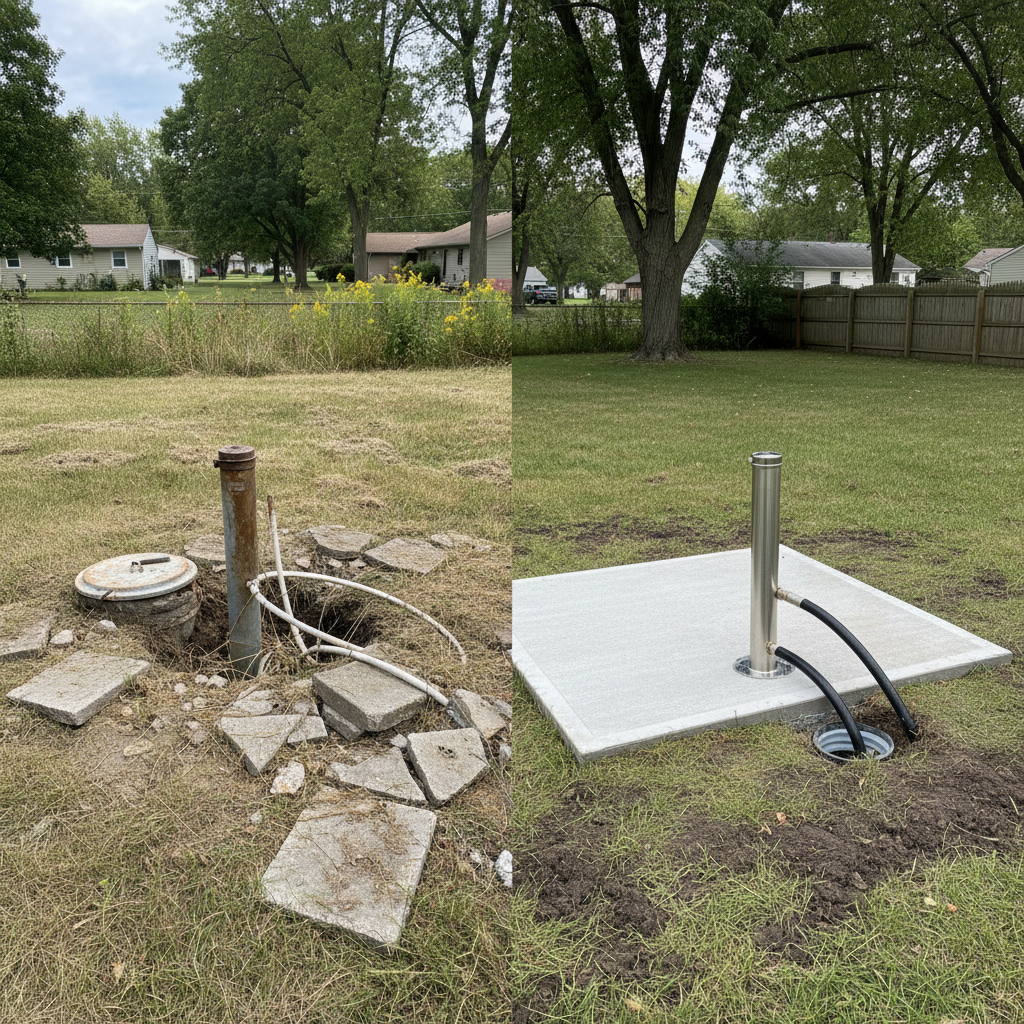
In terms of appearance, both types of wells usually end up with just a wellhead visible above ground, often protected by a well house or a simple cover. So, from a curb appeal standpoint, there isn't a huge difference once they're installed and finished properly.
Maintenance for both involves regular water testing and pump checks. But as I mentioned, a drilled well's sturdy construction generally means less hassle with the well structure itself. Driven wells are more susceptible to problems if the water table drops significantly, or if the well point gets clogged or damaged over time in less-than-ideal soil conditions.
Durability is where drilled wells really shine. They're built to last for decades, often 50 years or more, with proper care. Driven wells, while they can last a long time in perfect conditions, are generally considered to have a shorter lifespan and are more vulnerable to environmental changes or geological surprises.
My Recommendation for Flint Homeowners
Look, if you're asking me, for most homeowners in and around Flint, a drilled well is almost always the better long-term investment. While a driven well might save you some money upfront, the limitations on depth, the potential for hitting impenetrable layers, and the generally lower yield and durability just don't make sense for most properties here.
We've got some varied geology in Genesee County. You might find a nice sandy spot perfect for a driven well, but just a few yards over, you could hit a thick layer of glacial till or bedrock that'll stop a driven well cold. With a drilled well, we can adapt to those conditions and ensure you get a consistent, reliable water supply for your home. It's about investing in a dependable water source that won't give you headaches down the road.
If you're thinking about a new well, give us a call at Apex Well Drilling. We'll come out, check your property, and give you an honest assessment of what makes the most sense for your specific situation. You want clean, reliable water, and we're here to make sure you get it.